
Last updated: 27 May 2026 | 10716 Views |

Saharat P-varakoon (สหรัฐ พัฒนกิจวรกุล) A fiercely visceral and uninhibited voice in contemporary Thai literature, plunging fearlessly into the depths of human obsession, carnal desire, and existential isolation to lay bare the raw, unfiltered essence of humanity.
"The genesis of my writing lies in self-obsession. It must be so, for obsession is the sole crucible through which I can discern the very purpose of my fixation."
— Saharat P-varakoon (สหรัฐ พัฒนกิจวรกุล)
Who is Saharat P-varakoon (สหรัฐ พัฒนกิจวรกุล)? To summarize his essence, he was once a drinker, a wanderer, and a lover—intertwined inextricably with his identity as a writer, and most frequently, a poet. Saharat inhabits all these realms with effortless fluidity.
In terms of his literary endeavor, though he lacked an extensive pedigree as a poet and never steered himself toward the conventional intellectual societies frequented by his peers, this proved no obstacle to his creative impetus. The raw currency of his lived experiences was more than sufficient to yield an infinite stream of verses and prose. His fatefully decreed initiation into poetry was remarkably egalitarian: a foundational reading of the tragic romance magazine Sala Khon Srao (ศาลาคนเศร้า), which later paved the way to Gu Long (โกวเล้ง), Zhuangzi (จวงจื่อ), Friedrich Nietzsche (นิทเช่), and ultimately, led back to the crystallization of Saharat himself.
Emerging initially from the Indy Awards (วรรณกรรมรางวัล Indy) and the peripheral independent publisher Chaikhob (ชายขอบ), Saharat eventually anchored his literary career with Sommadhi Publishing House (สำนักพิมพ์สมมติ).
Literary Oeuvre and Evolution
In 2015, his debut volume under Sommadhi Publishing House was released under the eccentric title, The Final Fictional Experience (ประสบการณ์สมมติครั้งสุดท้าย). Despite its title, it marked his inaugural foray into this simulated literary space. The work is a linguistic tapestry woven from the mischievous and peculiar eccentricities of his intellect—a spontaneous eruption born from the anxieties of a daydreamer addicted to volatile currents of thought, leaving words abandoned in the cluttered, unwashed recesses of the mind.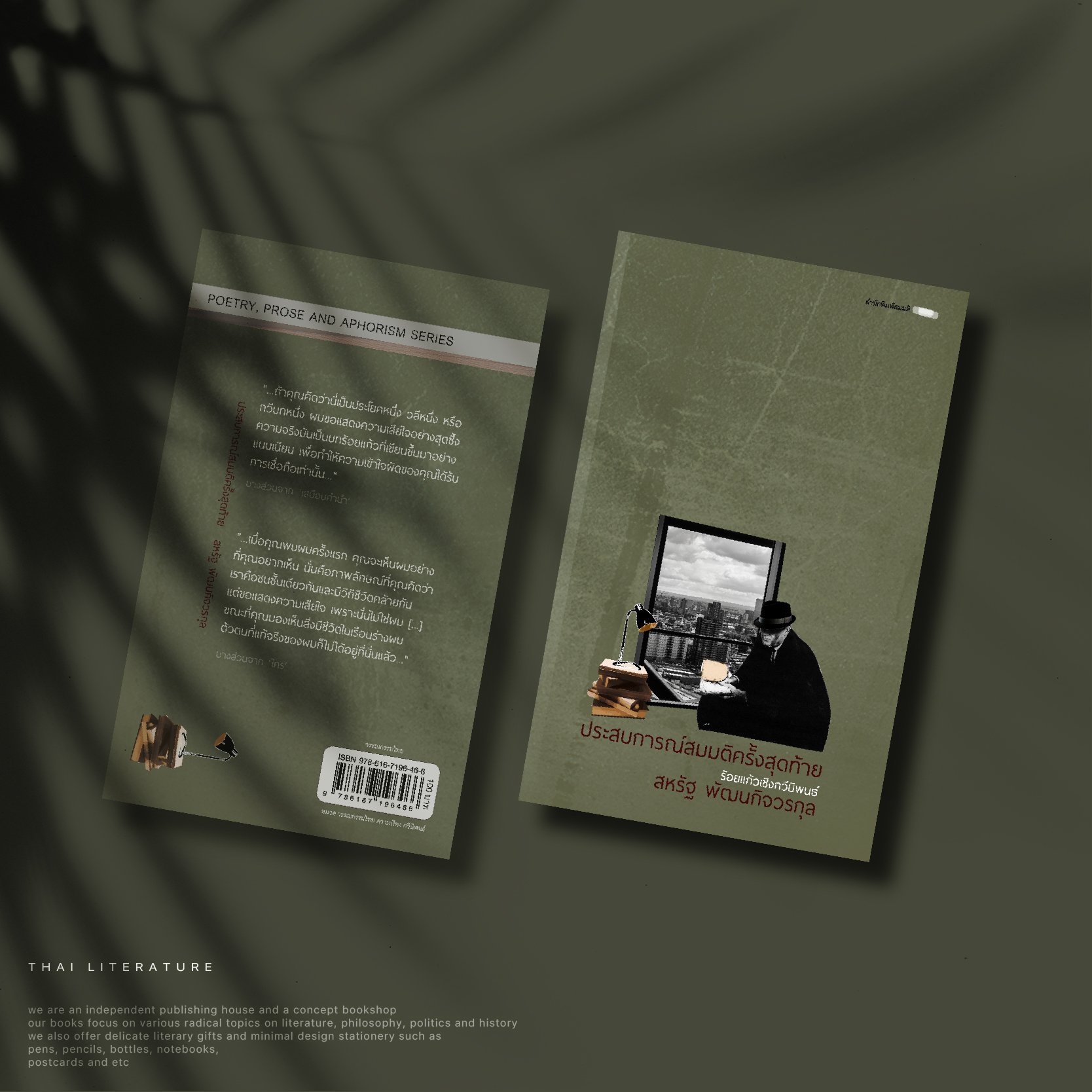
If read superficially, one might dismiss the volume as mere whimsical rambling, devoid of any profound meaning. This is precisely because the text is uncompromisingly 'real,' 'raw,' and written with a 'free-hand' autonomy. The work defies conventional categorization, seamlessly shifting between poetry, memoir, essay, verse, prose, commentary, and the short story. Yet, regardless of the nomenclature assigned to it, this fluid mastery remains Saharat’s distinct forte.
By 2017, firmly maintaining that "the written word becomes art only when orchestrated by an artist," Saharat delivered his sophomore effort, Within the Monotony of Existence (ในความซ้ำซากของชีวิต). Distilled from a warm, increasingly concentrated heart, this work demonstrated a heightened maturity in both philosophical outlook and linguistic precision. The thematic core posits that one of the most vital imperatives of existence is the relentless interrogation of the life one lives. For Saharat, self-examination is just as crucial as spending one's days to accumulate what we call 'experience.' The text operates like a direct punch—unfelt perhaps in the immediate second of impact, but definitively unforgettable.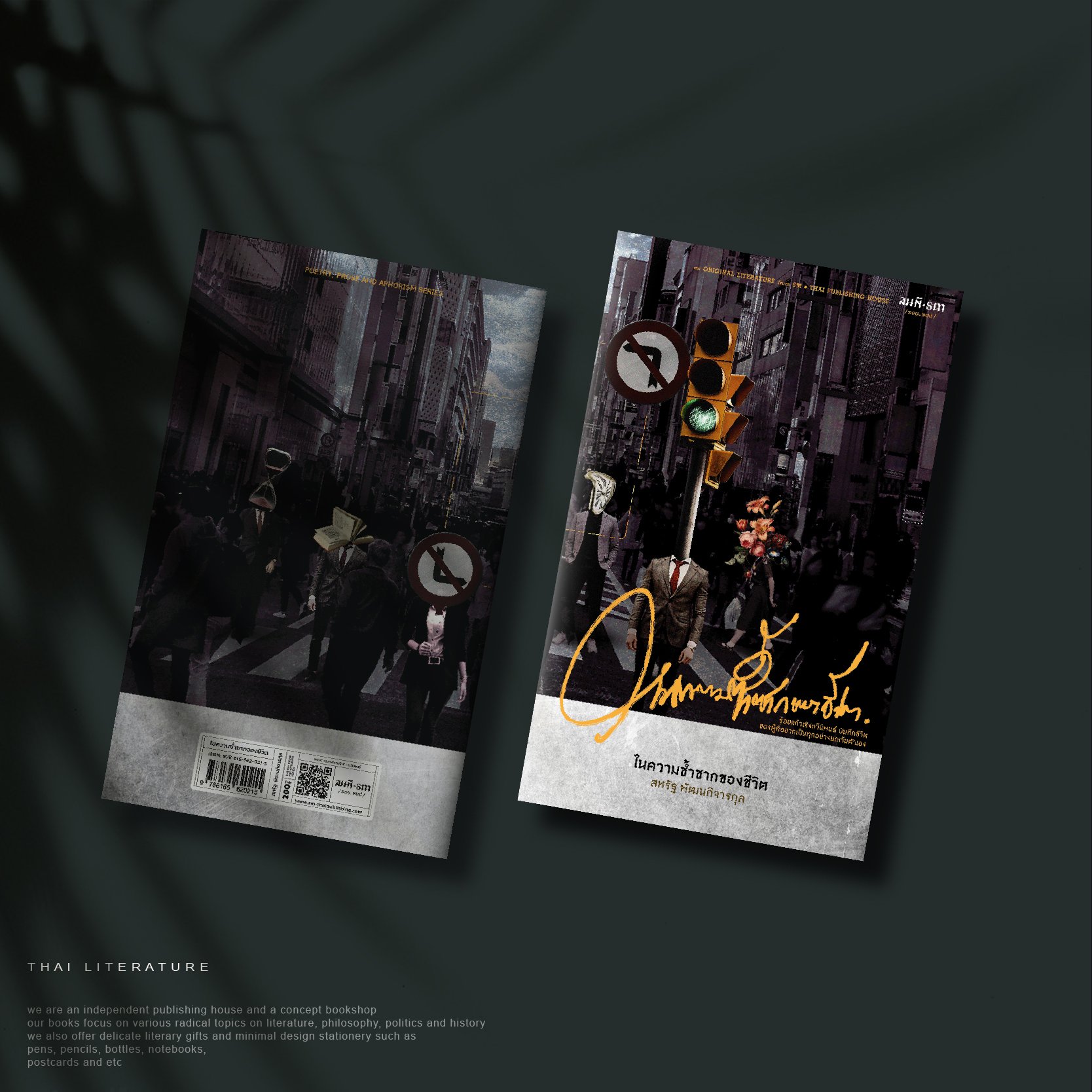
The Magnum Opus and Recent Milestones
In 2019, Saharat returned with a more deliberate, meticulous, and grounded stride, harmonizing his external reality with his internal psyche to produce The Human Composition (มนุษย์นิพนธ์).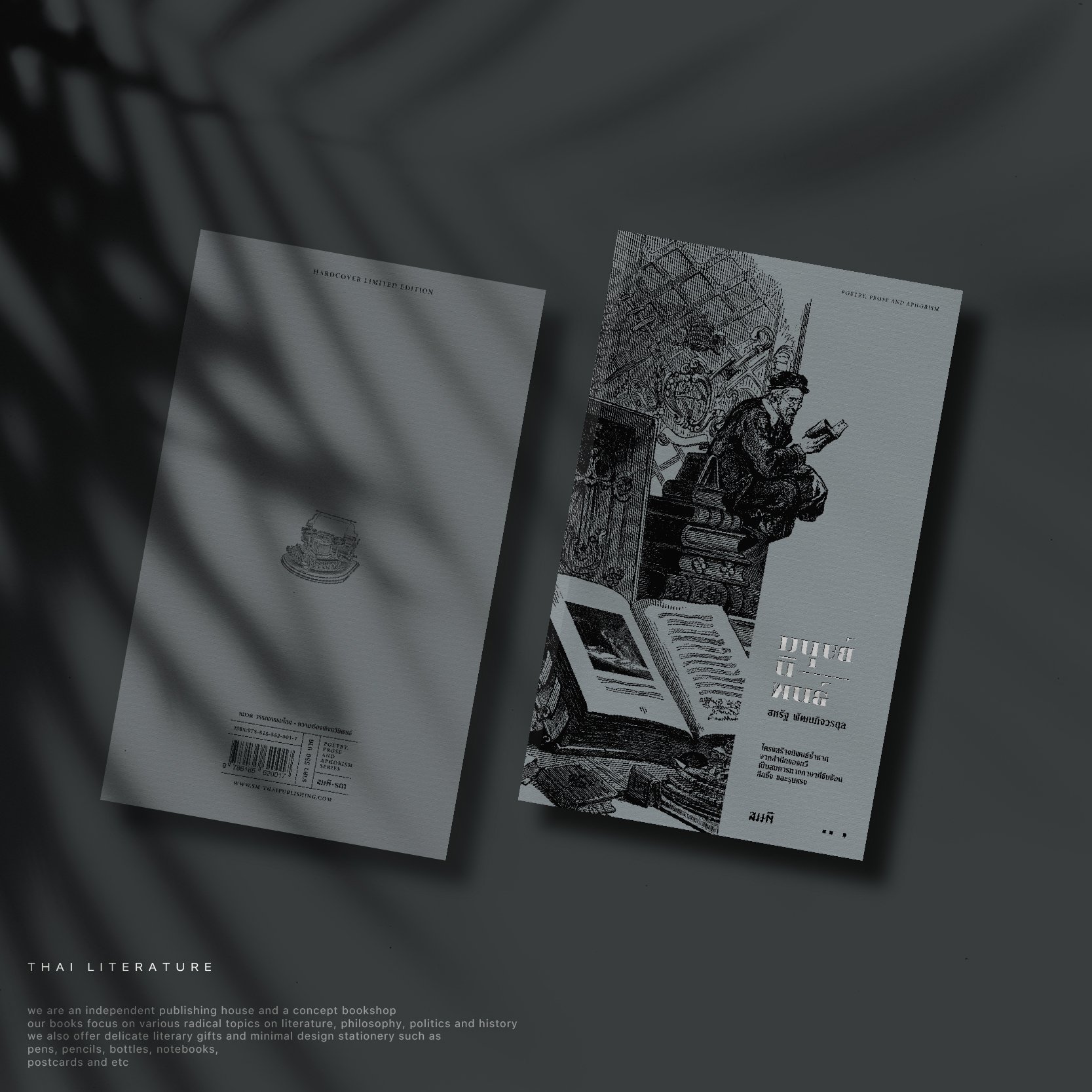
The Human Composition (มนุษย์นิพนธ์) stands as a monument to the author's literary journey. This grand epic of human emotion navigates the melancholy, complex, and clandestine recesses of desire, articulating a symphony of over one hundred thousand words through the author's poetic consciousness. It is a work that strips away the veneer of intense eroticism, exposes the nakedness of fantasy, trespasses into heaven, violates hell, and challenges moral promiscuity without ever surrendering to the illusions or realities before it.
Each chapter possesses its own rhythmic cadence and length, showcasing a sophisticated command of language clearly influenced by the stylistic mastery of 'Rong Wongsawan (รงค์ วงษ์สวรรค์), Gu Long (โกวเล้ง), and the subterranean pulse of Beat Generation poets like Allen Ginsberg (อัลเลน กินสเบิร์ก).
Just as Gu Long’s (โกวเล้ง) The Sentimental Swordsman (ฤทธิ์มีดสั้น) contemplates the martial world, righteousness, and camaraderie, Saharat's Manusamhita (มนุษย์นิพนธ์) mirrors that emotional depth. Though it harbors no ambition to conquer the literary world, the book encapsulates the very society we inhabit, the friends we keep, and the women we love. Ultimately, both authors write the fundamental story of humanity. If one were to wager that five centuries from now, a reader of The Sentimental Swordsman (ฤทธิ์มีดสั้น) would feel the exact same emotional resonance as readers did five hundred years ago, Sommadhi Publishing House (สำนักพิมพ์สมมติ) confidently asserts the same for Saharat. Centuries later, future readers will intuitively comprehend and feel his work, because it speaks directly to the universal condition of being human—an authentic, visceral reality that is far from surreal.
Subsequently, in 2023, Saharat released The Chaotic Memoir (วิมานปีศาจ), a chronicle capturing the duality of joy and its stark antithesis. The work serves as a poignant reflection on life, love, carnal passion, and isolation—chronicling the identity of a soul who is simultaneously hedonistic and grief-stricken, wandering along the detours of Nirvana and heaven. It invites readers to encounter the nocturnal rhythms of life and the alluring fragrance of womanhood, penned by a man who shares a far deeper intimacy with the dark than with the light. Beyond a mere confession, it encapsulates the profound ache of loneliness, unromantic love, and social alienation. Regardless of age, readers are invited to re-experience these truths and contemplate the fragments of their own existence.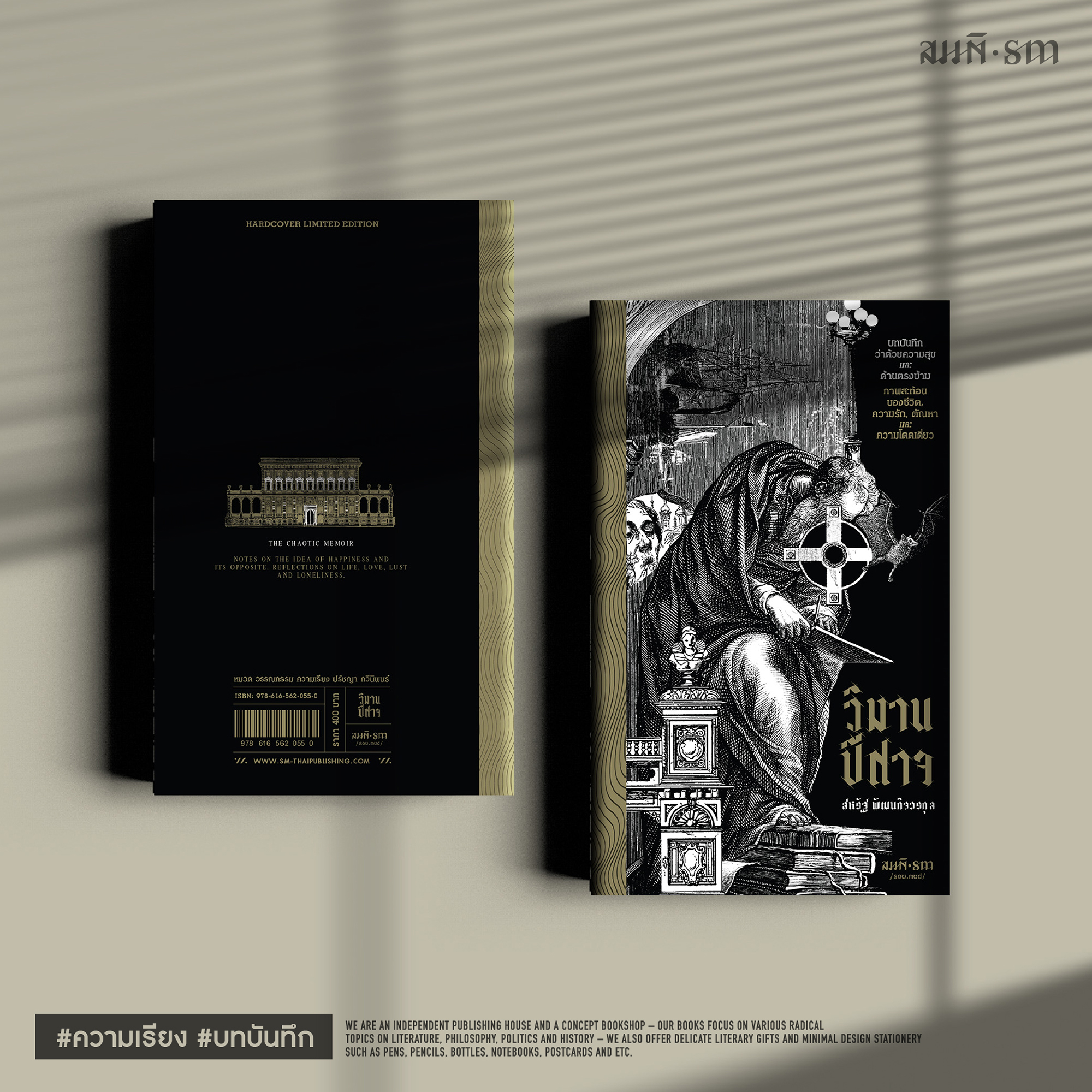


26 Sep 2022

11 Feb 2022

16 Sep 2022

3 Apr 2022