
Last updated: 27 May 2026 | 16600 Views |

Nikolai Gogol: The foundational patriarch of Russian realism whose satirical genius laid bare the absurdities of human nature and bureaucratic corruption.
In the grand pantheon of world literature, few figures command as unique a presence as Nikolai Vasilievich Gogol (นิโคไล วาสสิเลียวิช โกโกล: 1809 - 1852). Widely revered as the father of Russian literary realism, his prose operates as a sharp, satirical mirror to society, ruthlessly exposing the hypocrisy, vanity, and deep-seated corruption of the Imperial Russian bureaucracy. It can be said that while the political landscape of early 19th-century Russia was firmly under the iron fist of Tsar Nicholas I (พระเจ้าซาร์นิโคลัสที่ 1: 1796 - 1855), its literary and intellectual realm was entirely under the spell of Gogol's spellbinding prose.
The Overcoat: An Immortal Monolith of Short Fiction
Among his vast literary contributions, his short fiction stands as an enduring pillar of realism. Scholars, authors, and critics worldwide consistently celebrate The Overcoat (เสื้อโค้ต: 1842) as his absolute masterpiece.
The profound, far-reaching impact of this single narrative on subsequent generations of creators—particularly those during the late 19th century—is perhaps best summarized by the legendary Fyodor Dostoevsky (ดอสโตเยฟสกี: 1821 - 1881), who famously declared:
“We all came out from under Gogol’s Overcoat.”
Reflecting on this monumental legacy, scholar and translator Chaiyan Rajchagool (ไชยันต์ รัชชกูล) notes that Gogol has never been swallowed by the tides of time. Instead, his works are continuously retranslated, reprinted, and reexamined. He adds with a touch of wit:
"Even though he passed away over 150 years ago, his work hasn't lost an ounce of its magical charm for writers, readers, and critics alike. I would confidently wager a bet on which name will endure longer into posterity: 'Gogol' or 'Google'."
A Comprehensive Bibliography of Masterpieces
Gogol's extraordinary literary career is punctuated by several foundational novels, plays, and short stories that continue to captivate global audiences:
Engaging with the Masterpiece via Sommadhi
To deliver the full depth and essence of this literary giant to contemporary readers, Sommadhi Publishing House (สำนักพิมพ์สมมติ) proudly presents the definitive Thai edition of The Overcoat (เสื้อโค้ต).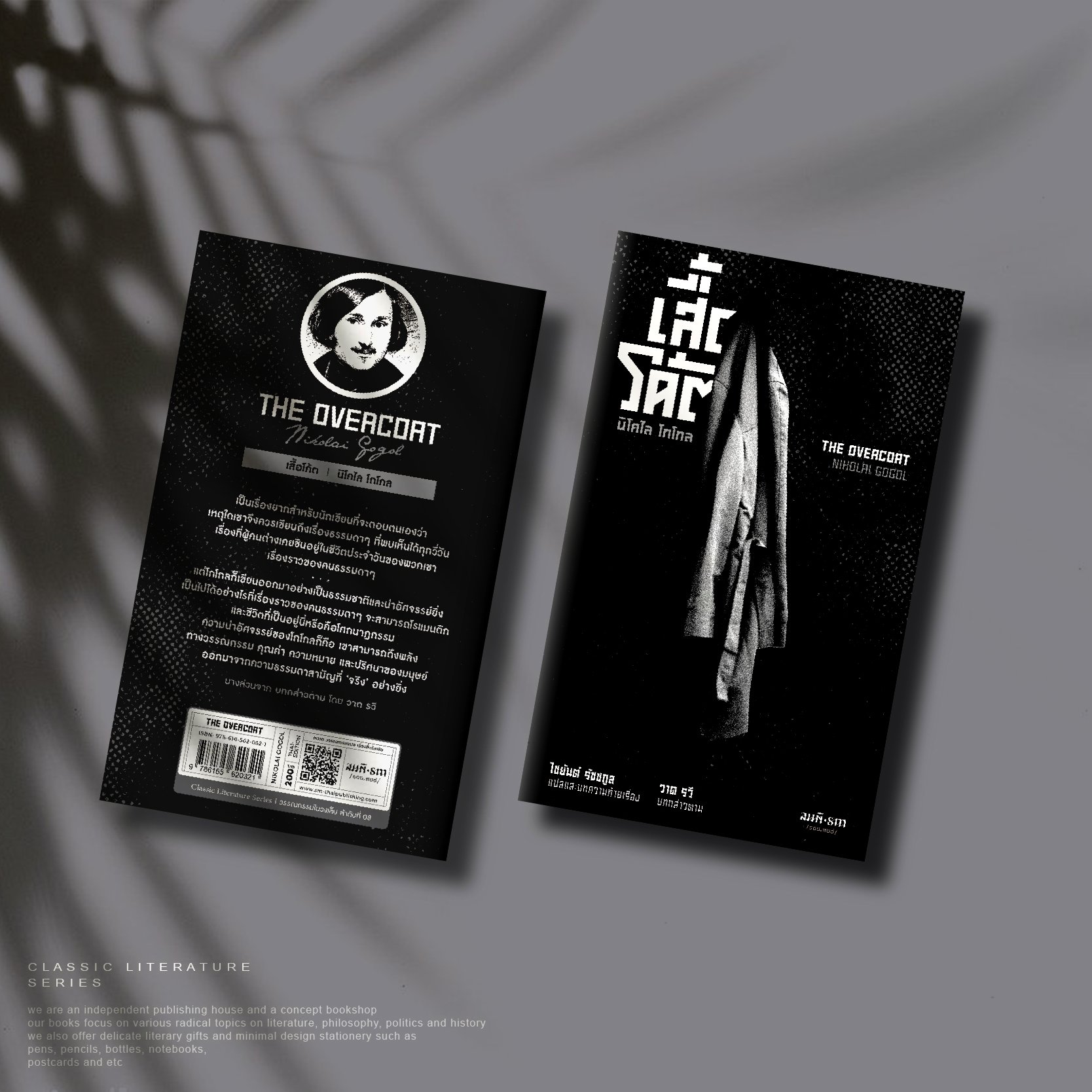
It features a masterful translation and extensive analytical postscript by Chaiyan Rajchagool (ไชยันต์ รัชชกูล), an illuminating afterword by Wad Rawee (วาด รวี), a historical biographical introduction by Kullawut Wiphaveegul (กุลวุฒิ วิภาวีกุล), and carries the prestigious endorsement of Vladimir Nabokov (วลาดิเมียร์ นาโบคอฟ), who hailed it as "the greatest Russian short story ever written."


16 Sep 2022

3 Apr 2022

26 Sep 2022

11 Feb 2022